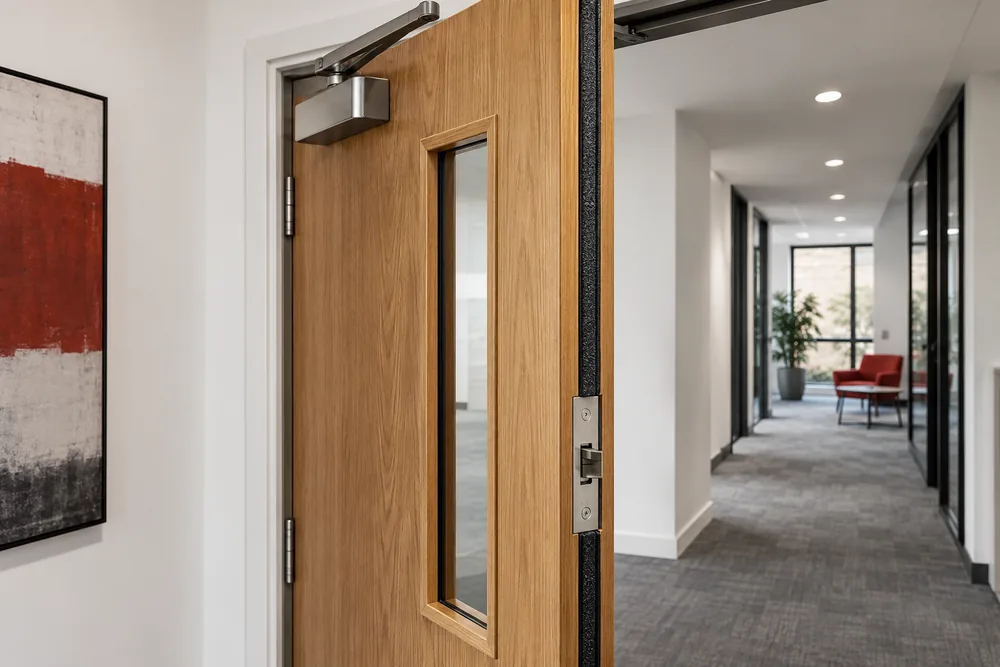
Understand The Door As A System
Fire door inspection considers the door leaf, frame, seals, glazing and hardware together. The way these components work as an assembly matters to fire and smoke performance. We help Derby business premises scope condition inspections and door registers that give facilities teams a usable basis for repairs and further investigation.
A door that looks substantial is not automatically a verified fire door. Available product information, labels and installation records help establish what it was intended to achieve. Where evidence is absent, an inspection should state that limitation rather than invent a rating from appearance or paint colour.
Standards And Inspection Scope
BS 8214:2026 addresses fire-resisting and smoke control doors, including specification, design and performance in use. It supports considering a complete door system and the evidence behind its components. The Fire Safety Order requires relevant fire precautions to be maintained, but does not set one inspection interval for all commercial doors.
Agree whether the proposed inspection is visual and non-destructive or includes opening-up work. A condition inspection cannot reveal all concealed fixings or prove a fire-resistance rating through visual observation. Any intrusive investigation needs permission, a defined method and arrangements for restoring the assembly afterwards.
From Defects To A Repair Plan
An inspection should record door identity, location, observed condition and the evidence available. Closers, hinges, latches, seals and gaps all need consideration against the appropriate product information. Universal gap rules or unverified replacement parts can be misleading when a particular doorset has specific tested requirements.
Ask for photographs and a defect schedule that separates adjustments, component repairs and matters needing specialist design advice. Repair proposals should preserve compatibility with the door assembly. Before changing access control or adding hardware, check whether the proposed alteration is supported by the relevant evidence and will affect closing or escape.
The Process, Step By Step
- Confirm the door count, locations and available product or installation records.
- Agree inspection limits, access and any operational restrictions.
- Identify and inspect each accessible assembly and its operation.
- Record observations, evidence gaps and recommended actions by door reference.
- Use the register to commission suitable repairs and retain completion evidence.
Before authorising the visit, nominate a building contact who can answer questions and provide access. Agree how any inaccessible areas will be recorded and how a change to the scope will be approved. This makes the resulting report easier to use when allocating follow-up work.
Pricing A Fire Door Inspection
Door numbers, building layout, access restrictions and the depth of investigation affect cost. A visual survey is a different scope from intrusive verification, repair design or physical remedial work. Ask whether photographs, a door register, prioritisation and a return inspection are included, and identify who will authorise any additional work before it starts.
Compare the written deliverables as well as the quoted total. Ask for the scope, exclusions, records and any proposed remedial items to be stated separately. You can then make a purchasing decision with a clear understanding of what has been assessed, what has been tested and what remains to be investigated.
Your Questions Answered
Does An Inspection Certify A Door’s Fire Rating?
A fire door inspection does not establish a fire rating from appearance alone. Product evidence and the construction of the complete assembly matter. The report should explain its scope, findings and limits, including where concealed details or missing records prevent a conclusion, so that further investigation can be commissioned on a clear basis.
How Often Should Commercial Fire Doors Be Checked?
Commercial fire door checks should follow the building’s risk assessment, use, condition and relevant maintenance guidance. There is no single statutory interval that fits every commercial door. High-use or damaged doors may need closer attention, and obvious problems with closing, seals or hardware should be reported through your maintenance process when found.
Guidance And Related Services
Consult government workplace fire-safety guidance alongside advice for your premises. Technical design, maintenance and repair decisions need the appropriate competent specialist.
Explore fire risk assessment, fire alarm installation, fire alarm maintenance, fire extinguisher servicing, emergency lighting testing, fire suppression systems. View our local coverage or send the premises details.